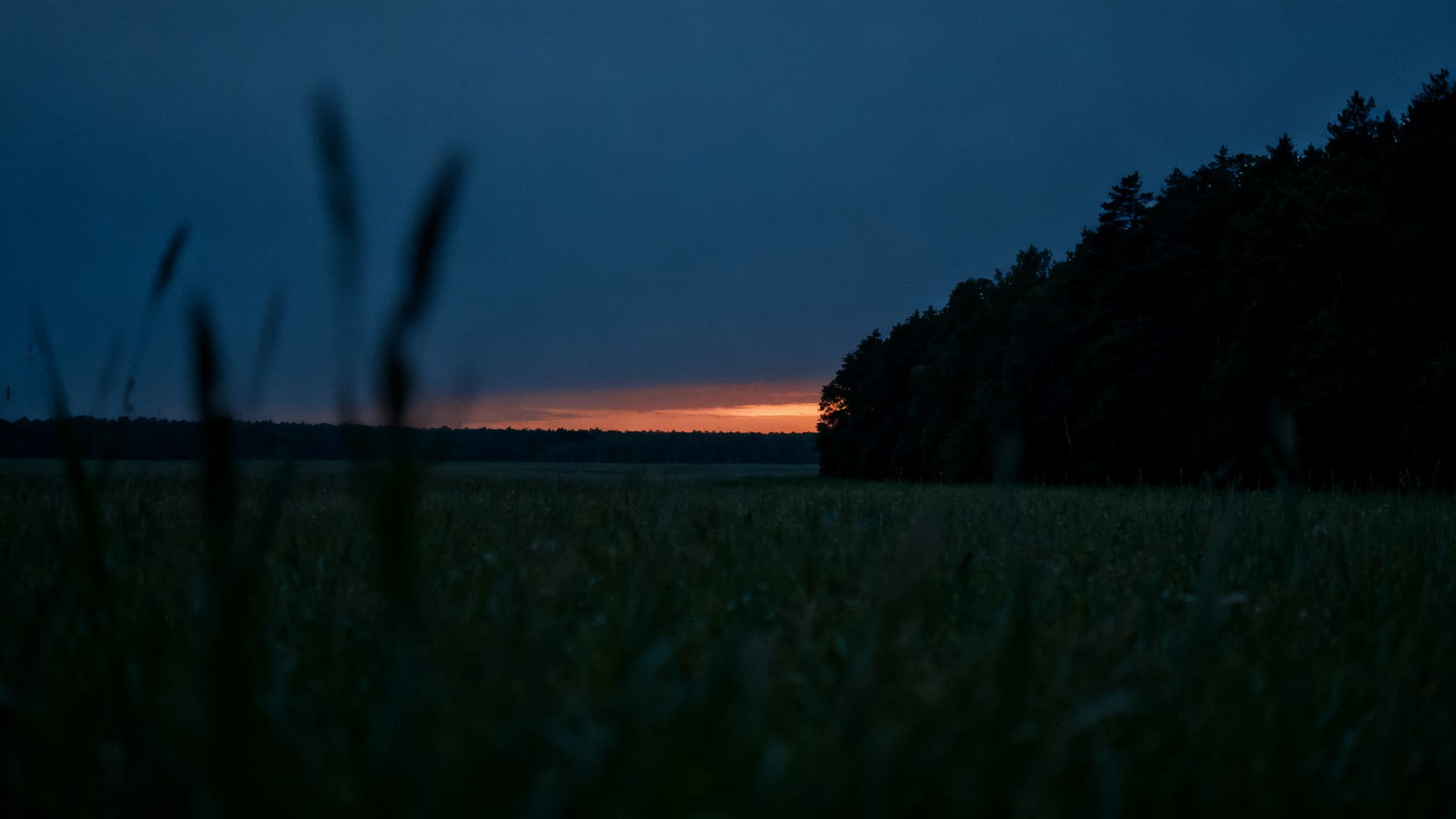
Boredom as a doorway
The flat stretch that makes you want to quit is the same stretch that leads to the quiet you came for.
Twenty Minutes In
About twenty minutes into anything you make with your hands, it stops being interesting.
Not hard. Not frustrating. Just flat. The novelty has burned off and there's still a long way to go. Your hands know the motion now. They don't need you watching. And into that space comes a small, insistent voice: this is boring. Go find something else.
I want to talk about that voice. Because it shows up every single time. And almost nobody stays long enough to hear what comes after it.
What We Do Instead
Mostly we obey it. We stand up. We check the thing in our pocket. We put on a kettle we don't want. We remember an email that could have waited a week.
None of this is laziness. It's a trained reflex. We grew up being told that boredom is a problem to solve — a gap to be filled, quickly, with anything at all. So we learn to read it as information. Boredom means wrong activity. Wrong afternoon. Wasted time. And we get up, every time, right at the threshold.
The threshold is the interesting part. We always leave at exactly the moment something is about to change.
Not a Wall
Because boredom isn't the wall. It's the door.
The flat stretch is what happens when your attention finishes looking for entertainment and hasn't found any. It searches, comes up empty, and eventually — this is the part — it gives up and settles.
That settling is the quiet everyone's after. And you cannot get to it early. It sits on the far side of twenty dull minutes, and there is no other road in.
Nothing dramatic is behind that door. No breakthrough. No revelation. Just you, a task your body already knows, and a mind that has finally run out of things to chase.
Why the Hands Matter
This is one of the reasons making with your hands works the way it does. The body can hold a rhythm the mind can't hold by itself. When you're doing something repetitive and known — stitching, sanding, kneading, carving — your hands become an anchor. They keep the pace even when your mind wants to bolt.
The boredom shows up because your mind is still looking around for stimulation. But your hands are already committed. They don't need the novelty. They're fine. And if you let them keep going, they'll carry you through the stretch your mind can't manage on its own.
That's the partnership. The hands steady the mind. The mind eventually stops struggling and lets the hands lead.
Declining to Obey
So the practice is unglamorous. Boredom arrives. You notice it. You name it — oh, there you are — and you keep your hands moving anyway.
You're not pushing through it. Nothing to conquer here. You just decline to obey. You let boredom sit down beside you and be as boring as it likes.
Keep the movement small and known. The bit you could do half-asleep. Boredom is easier to sit with when your hands don't need instructions.
It doesn't take long, usually. Ten minutes, sometimes less. Then you look up and the light in the room has moved and you have no idea where the time went.
Permission to Be Bored
Not because the work got exciting. It didn't. Stitch after stitch, sanding the same edge. It stayed exactly as dull as it was.
You just stopped standing at the door, arguing with yourself about whether to walk through it. At some point you stopped arguing, and you were simply inside.
Boredom isn't a verdict on what you're doing. Most of the time it's the last thing a busy mind says before it goes quiet. You're allowed to be bored. You're allowed to stay.
The quiet you're looking for is on the other side of that boredom. It always has been.