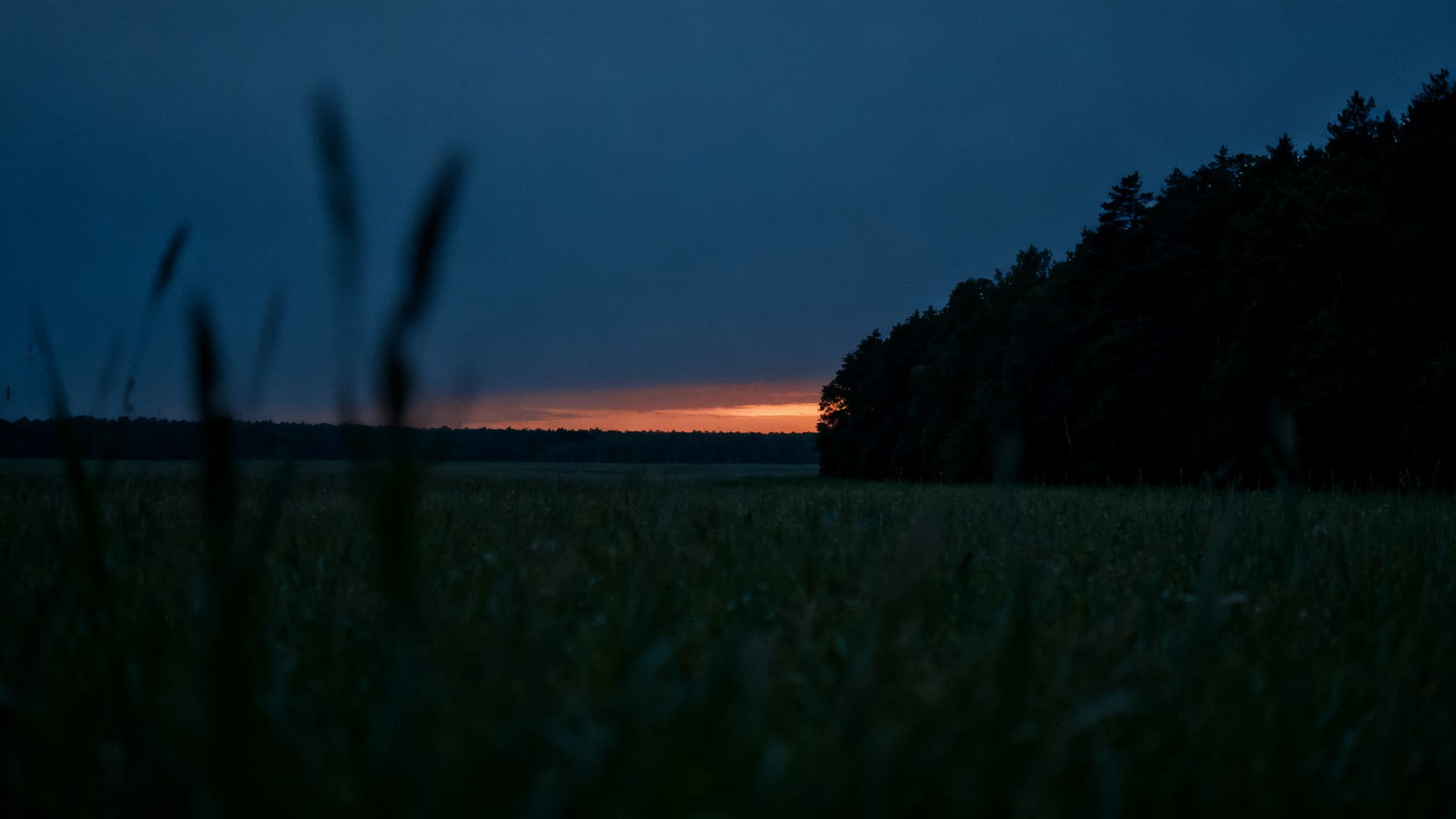
The beach at off-hours
The beach you moved here for is not the one in the postcard. It's the one nobody photographs.
The postcard hour
There's a version of the beach almost everyone carries in their head. Bright noon. Umbrellas in a row. Everybody squinting into the glare. It's a good picture. It's also the least comfortable hour of the day, in the least comfortable month.
The beach at noon in a hot place isn't rest. It's endurance with a nice view.
Which is strange, because you moved here for the water. Or you grew up with it twenty minutes from your door. And somehow you go three times a year.
An hour of preparation
Part of it is that we turned the beach into an event. The cooler. The chairs. The towels, the sunscreen, the parking, the long walk across hot sand carrying all of it.
An hour of preparation buys an hour of squinting. And because it cost so much to get there, you stay longer than the day is actually good for. You come home pink and gritty and a little relieved it's over.
Something you have to recover from isn't comfort. It's a project.
The gear is part of the problem. We've been taught that to enjoy the beach properly, you need to arrive with things — things to sit on, things to eat, things to shade you. The whole industry of beach comfort is built around the noon hour, which is the hour that needs the most equipment because it's the least comfortable. You're buying your way through bad conditions when you could just change the hour.
Hours nobody claims
But the beach keeps hours nobody claims. Six in the morning. The last hour before dark. All of January. Any grey weekday in the wet months, when the sky sits low over the water.
Those hours belong to whoever bothers to show up. The light comes in sideways and forgiving. The sand is cool under your feet. The wind is a kindness instead of a hot breath on your neck.
Same water. Same sand. The same beach that punished you in July. Move the hour and the place changes character completely.
This isn't a compromise or a consolation prize. It's how people who actually live near water have always used it. Not as a destination. As a walk that happens to end at the ocean.
Twenty minutes
So go with nothing. No cooler, no chair, no umbrella, no plan to stay. Keys, and your shoes in your hand.
Twenty minutes is a whole visit. Walk down, stand in the water to your ankles, turn around, come home. You don't owe the ocean an afternoon. It won't notice.
In January, bring a sweatshirt and use it. Sit on sand cold enough that you want sleeves. That's as close to winter as this place will give you. Worth showing up for.
Go often instead of long. Before work. After dinner, when there are four cars in the lot. It stops being a trip and becomes somewhere you pass through — part of the texture of an ordinary day rather than a production you have to gear up for.
This is what comfort looks like in a hot climate. Not the perfect setup that lets you endure the worst hours. The quiet hours themselves, which ask nothing of you.
The real one
Visitors get the postcard hours, because a week is all they have and noon is when they're awake for it. You live here. You get all the other hours — the ones that don't photograph well and feel better.
The empty beach at dusk isn't a lesser beach. Grey water, one heron, somebody's dog trotting ahead of its owner. For anyone who has to live in this heat all year, that's the real one.
You are allowed to go for twenty minutes. You are allowed to leave the cooler home. You are allowed to love the version of this place that nobody photographs.
The beach isn't somewhere you go. It's somewhere you live near — and the living near is the whole point.