Light: the case against the overhead bulb
The smallest decision in your house is quietly costing you the most comfort.
Walk into almost any room after dark, and the first thing your hand does is find the switch by the door. One click. The whole room floods at once. Most of us have done this every evening of our lives without thinking about it.
That's the thing. It's automatic. Your hand reaches before your eyes even adjust. And then the room is just — on. All of it. Everywhere. The same.
It's the smallest decision in your house. It's also, I think, the one quietly costing you the most comfort.
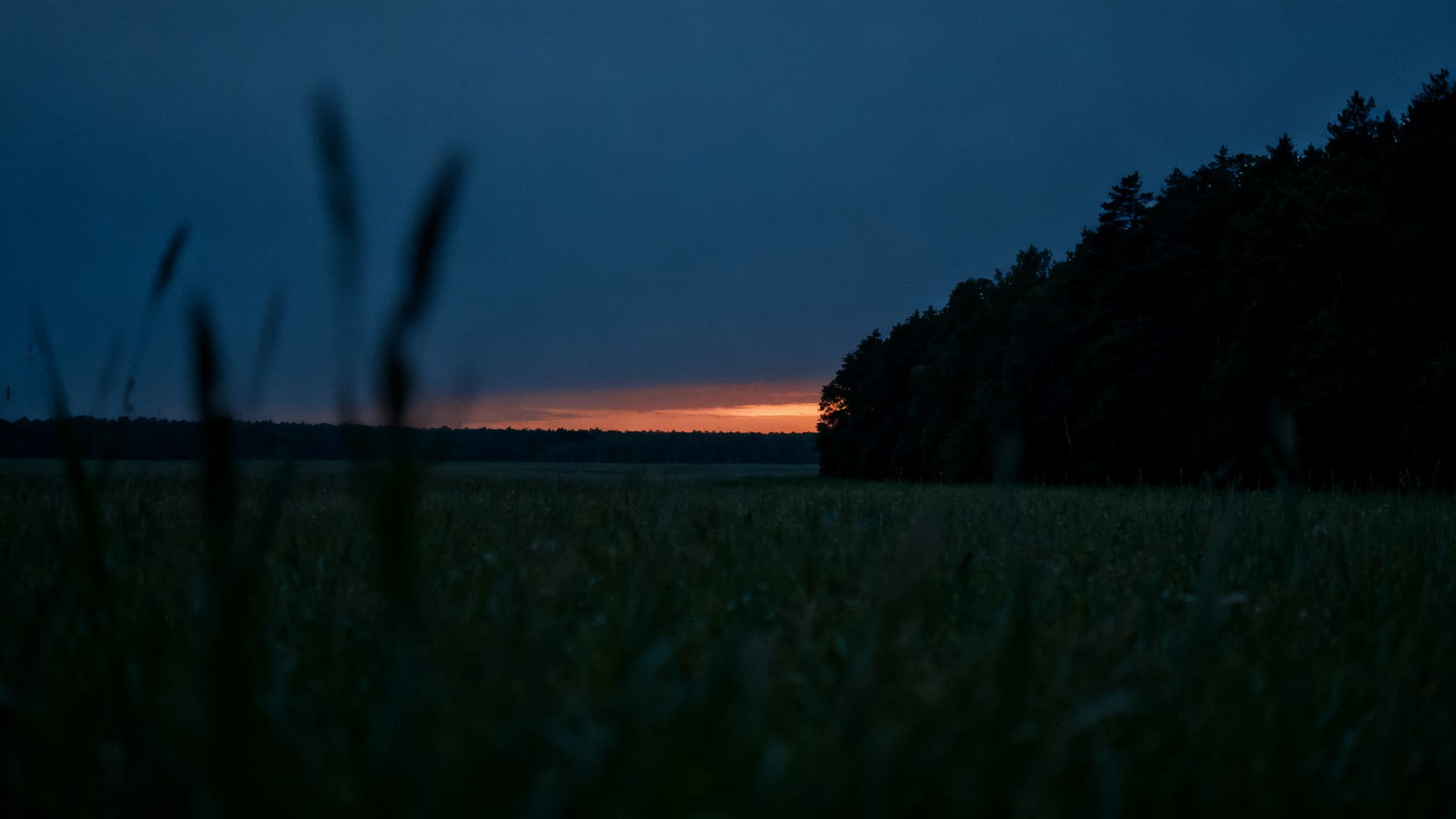
Because the light you choose in the evening decides what kind of evening it is. Before the blanket. Before the cup. Before anything else has a chance to set the tone, the light has already set it for you.
Light that doesn't care how you feel
The overhead bulb comes from the ceiling, straight down, all at once. Nothing in the room is left alone with itself. Every corner gets the same amount of attention — which means no corner gets any. There's nowhere your eye can rest, because everything is equally lit. There's no shape to the evening.
Think about where else you meet that light. Waiting rooms. A supermarket aisle at ten at night. The corridor of an office after everyone's gone home. Places built so you can see clearly, and that don't much care how you feel. Functional spaces. Pass-through spaces. Nobody settles into a fluorescent corridor with a book.
Your body knows the difference. Under one big flat light you sit a little straighter. You don't quite settle in. Something in you stays slightly alert, slightly on. That's not a mood problem you need to fix. That's not something wrong with you. That's the light.
We've been living under overhead bulbs for maybe a hundred years, which sounds like a long time, except that humans have been reading evening light for vastly longer than that. The sun near the horizon. A fire on the ground. A candle on a table between two faces. Every kind of evening light we've ever loved is low, warm, and coming from the side. Our bodies are still reading the old signals. The overhead bulb is telling your body it's midday in a waiting room. No wonder you can't settle.
Low, and in more than one place
There are only two things to change. Put the light lower. And put it in more than one place.
That's it. Two adjustments. Not a renovation, not a shopping list.
Light from below and beside tells the body the day is closing. Light from above tells it to keep working. It's that simple. When you bring a lamp down to table height or below, you're speaking a language your body already understands — the language of sunset, of firelight, of a single flame in a dark room.
And when the light comes from three or four small sources instead of one big one, the shadows come back. Depth returns. Corners become corners again. There's somewhere to look and somewhere to rest your eyes. The room gets shape. It gets texture. It becomes a place you can be in, rather than a space you're being processed by.
One lamp in a corner. Another on a low shelf. A small one near where you sit. They don't have to match. They don't have to be anything special. They just have to be low, warm, and more than one.
Tonight, backwards
So tonight, try it backwards. Leave the big light off when you walk in. Let the room be dark for a moment. Then turn things on one at a time, and stop the moment you can see enough.
You almost certainly don't need to buy anything for this. A table lamp set down on the floor. The lamp from the spare room nobody uses. A bulb moved from one fitting to another. The candle that's been in a drawer since somebody's birthday. String lights draped along a shelf. The reading lamp that usually lives on your desk, temporarily relocated to the corner of the living room.
Then sit down inside it. Give it ten minutes. Notice whether your shoulders come down. That's the whole test — not how the room looks, but whether you can rest in it. Not whether it's pretty. Whether it lets you be there.
The switch works both ways
Some nights you need the bright light. Chopping onions, finding a splinter, hunting for something under the sofa. Turn it on. Use it. Then turn it off again when the job is done. The switch works both ways — that's the whole point of having one.
But most evenings, you don't need it. Most evenings, you're not performing a task. You're just being in your house.
You are allowed to keep the big light off. You are allowed to sit in a dim, warm room and be perfectly fine there. You are allowed to let the evening look like an evening.
It costs nothing. And it changes everything about the room.