The Sunday Afternoon
The Memory
Do you remember Sunday afternoons?
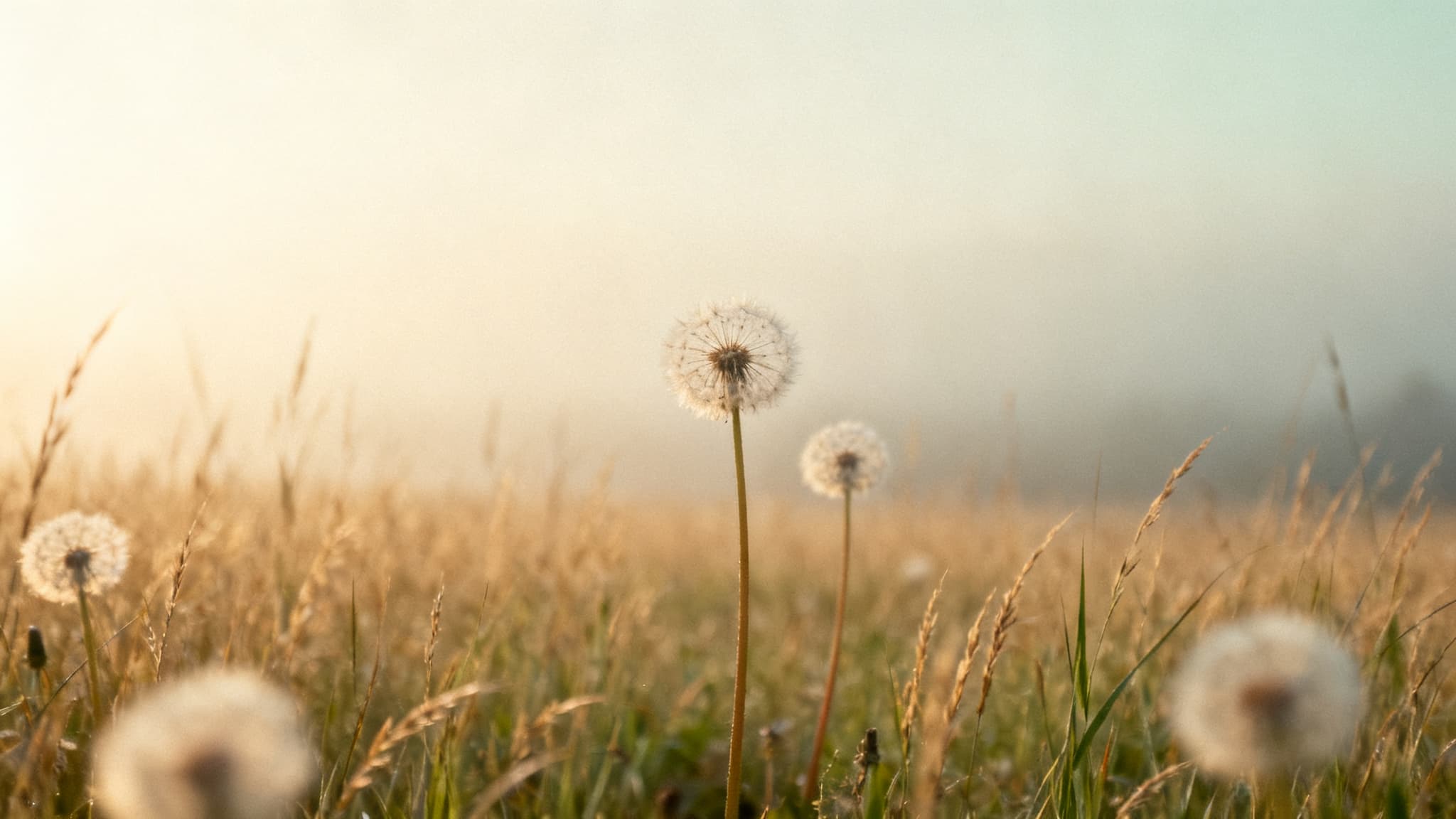
Not the version filled with half-finished emails, grocery runs, and the quiet dread of Monday. The other kind. The kind that felt like time softened around the edges. Like the world collectively agreed to breathe a little slower.
For many of us, Sunday afternoons were a tiny sanctuary. No performance. No productivity. No pressure to “make the most” of anything. Just hours that belonged to themselves—and, somehow, to us.
If that feels distant now, you’re not alone.
The Feeling
There was a particular texture to those afternoons.
Maybe you’d read for what felt like forever, turning pages without checking the clock. Maybe you’d nap on the couch and wake up disoriented in the best way—unsure whether you’d been gone for ten minutes or two hours. Maybe you’d sit near a window and watch the light move across the room, thinking about nothing important and everything at once.
Those hours weren’t empty. They were full—just not with tasks.
They were full of presence. A quieter kind of attention. The feeling of being alive without needing to justify it, optimize it, or post it. Even boredom, in small doses, had a kind of restorative magic: it made room for your mind to wander, connect dots, and settle.
Our nervous systems love that. They recognize it as safety.
Where Did They Go?
Somewhere along the way, we stopped having them.
Sunday afternoons became “catch-up time.” Errand time. Laundry time. “Let me just get ahead” time. The pause button didn’t exactly break—we just stopped reaching for it.
And modern life makes it easy to forget pauses are allowed.
We carry our offices in our pockets. Messages arrive with the expectation of immediacy. The line between work and rest isn’t just blurry—it’s often invisible. Even when we’re technically off, part of us is still scanning, responding, anticipating.
That constant low-grade engagement does something subtle over time. It trains the brain to treat stillness like a problem to solve. If you sit down with “nothing to do,” your mind may immediately generate a list. Or reach for a screen. Or try to turn rest into a project: a perfect self-care routine, a maximally soothing afternoon, a planned recharge.
But the old Sunday afternoon energy wasn’t a plan. It was permission.
The Return
Here’s the good news: Sunday afternoons didn’t disappear. We just stopped protecting them.
And we can start again.
Not by recreating the past exactly, but by reviving the function it served. Think of it as restoring a lost human rhythm: a block of time where you are not “on,” not optimizing, not trying to get somewhere else.
Pick an afternoon—any afternoon that works. It can be Sunday, or Tuesday, or the odd quiet patch on a Saturday. The day matters less than the boundary.
Then guard it fiercely.
That means deciding, ahead of time, what won’t go there: no “quick check” of work email, no squeezing in chores just because you found a spare hour, no scheduling your rest so tightly it becomes another form of labor.
You don’t have to fill the time with anything impressive. In fact, the point is to fill it with nothing. Or with things that don’t demand an outcome: reading without a productivity angle, staring out the window, making tea, lying on the floor, taking a slow walk without tracking steps, listening to music all the way through.
At first, it may feel uncomfortable. That’s normal. When your nervous system has been running on constant stimulation, quiet can feel strangely loud.
But your body remembers how to do this. It’s waiting for permission.
Permission (and the Role of AI)
In a world shaped by smart tools, always-on systems, and increasingly helpful AI, rest can start to feel optional—something you earn after you’ve extracted every ounce of efficiency.
But the more capable our tools become, the more intentional we have to be about our boundaries.
AI can draft the email, summarize the meeting, and organize the calendar. What it can’t do is restore the part of you that gets depleted by relentless alertness. That restoration requires a different input: slowness, space, unstructured time, moments where nothing is asked of you.
So consider making “Sunday afternoon” a practice—especially now. Not as nostalgia, but as a deliberate counterbalance to a life that keeps accelerating.
Choose an afternoon this week. Protect it like something sacred. Let time move without tracking it.
Closing Thought
Peace isn’t something you stumble into anymore. It has to be chosen, protected, and practiced.
The Sunday afternoon still exists. It’s just waiting for you to claim it.