Quality Over Status
The truest choices are the ones you'd never think to post.
What if you asked, quietly, what you'd choose if no one ever found out? Maybe it's the walk with no photo, the book nobody claps for, the evening in that never makes it online. Notice which choices get louder, and which finally get to just be yours.
Meta Launches 'Muse' Personalized Image-Generation Model in Meta AI · source →
It's worth noticing how many of our tools are built to make our lives more postable—and this week, a new one arrived that turns your own photographs into something clap-worthy. Which raises the quiet question underneath today's reflection: are we shaping our moments to be seen, or to be lived?
Meta introduced Muse this week, an image-generation model woven into Meta AI that takes your personal photos and reimagines them—your face as a Renaissance portrait, your living room restyled, your ordinary snapshots turned into claymation or polished product shots. It joins Adobe Firefly and Google Imagen in a fast-crowding market where the promise is simple and seductive: with a tap, your life can look more remarkable than it felt. The company frames it as creative empowerment, and in many ways it is. But it also renews old questions about consent, data, and the widening gap between what actually happened and what we present as having happened.
What if the most interesting thing here isn't the technology, but the desire it's designed to meet? Muse is, at heart, a machine for making the postable version of a life—the enhanced angle, the flattering style, the frame that earns a reaction. There's nothing wrong with wanting beauty, or with playing. Yet it's worth sitting with how naturally we now reach for the tool that helps a moment perform, and how rarely we're offered a tool that helps a moment simply be.
Consider the walk you took that had no good photo, the meal you ate slowly with no filter, the version of your face that would never trend. Muse can transform an image of your evening; it cannot transform the evening itself, and maybe that's the quiet dividing line today's reflection points to. The truest parts of your day are often the ones that resist styling—the ones that were never meant for an audience in the first place.
Maybe the practice isn't to reject these tools, but to notice which of your choices are secretly auditioning for applause. When you feel the pull to capture, enhance, and share, you might gently ask: would I still choose this if no one ever saw it? Some things will get louder in the asking, revealing they were always a bit about status. And some will finally soften into something that belongs to you alone.
Tools like Muse arrive quietly, promising to make our lives look more remarkable than they felt—and there's real wonder in that. But underneath the play is a question we shouldn't answer alone: are we shaping our moments to be seen, or to be lived? This is exactly the kind of question that softens when we bring it to another person. The tech industry designs for individual attention, one screen at a time, but the antidote to a life spent performing is a life spent connecting. We process the AI age best not by scrolling through it in isolation, but by sitting across from each other and asking what kind of humans we want to remain.
Lo-fi Music Playlist
Gentle, slow-tempo beats that induce calmness and aid concentration without being distracting.
Play in the background while working, reading, or relaxing.
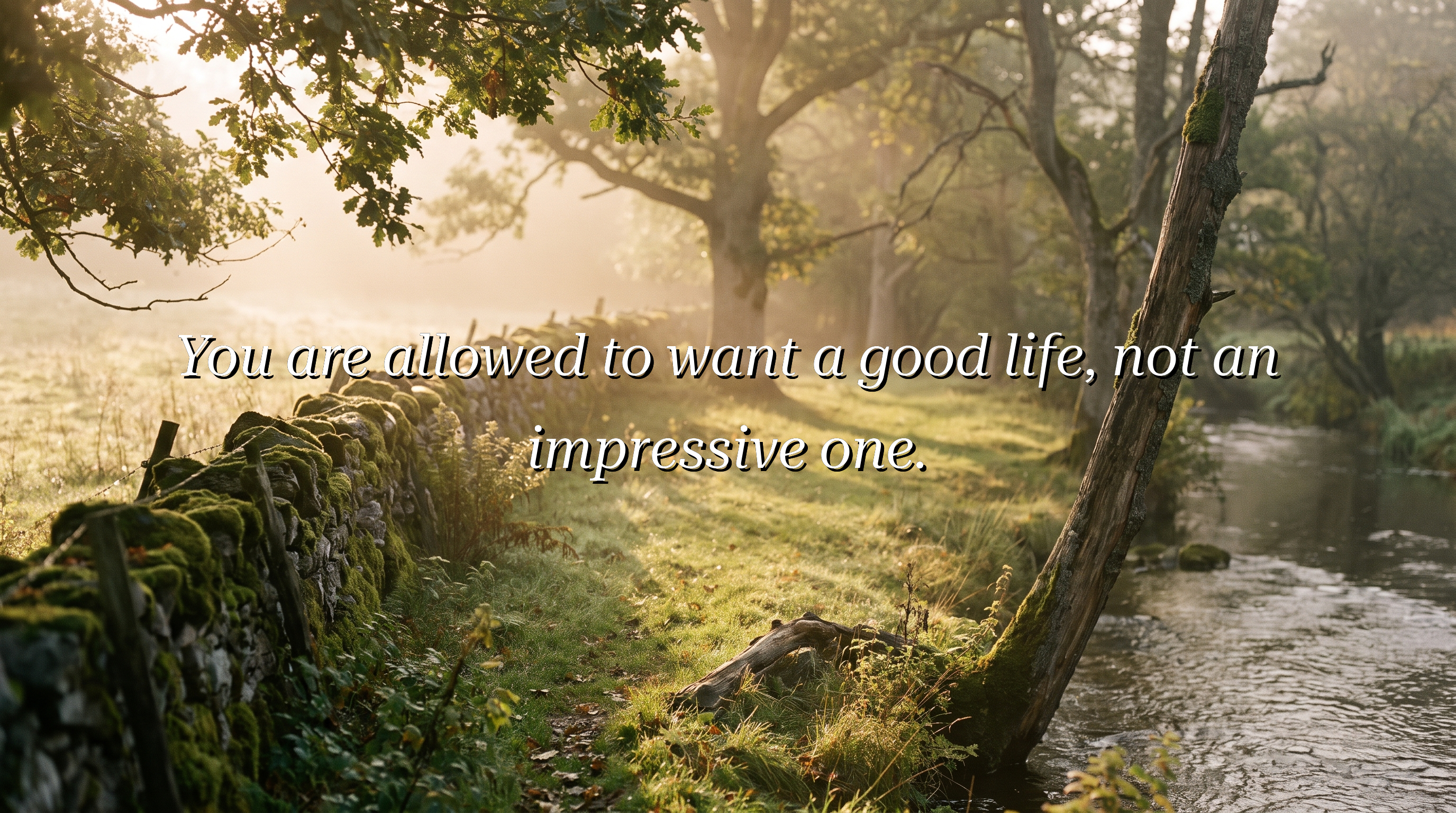
Today we sat with the quiet pull between quality and status—between the life we're living and the one we're tempted to perform. When we choose what's true over what looks impressive, we come home to ourselves. So remember this, friend:
What you just read is today's Daily Anchor, in full — a quote and a grounded reflection, free each morning. If it left you a little quieter than it found you, let me have the next one waiting for you tomorrow, so you never have to come looking.
Send me the Daily Anchor →